







Summarize With AI


- The global CRM software market reached $126.17 billion in 2026, on its way to $320.99 billion by 2034, per Fortune Business Insights.
- Companies that grow faster generate 40% more revenue from personalization than slower-growing competitors, according to a McKinsey analysis of the practice.
- 73% of customers now say companies treat them like an individual, up sharply from 39% in 2023, per Salesforce's 2026 State of the Connected Customer report.
- A 2014 Nucleus Research study, still widely cited today, found CRM returns $8.71 for every dollar spent, though that figure predates the AI-driven CRM tools most vendors sell now.
- 64% of customers believe companies are reckless with their data, which is the real risk of collecting CRM insights without a clear plan to act on them responsibly.
Most CRM insights articles list the same seven benefits (better personalization, fewer churned customers, tighter marketing spend) without saying what a manager should actually do on a Monday morning with that data. This one does.
We360.ai works with more than 120,000 users across 10,000-plus companies in 21-plus countries, and the pattern holds everywhere we look: the CRM tool matters less than whether anyone owns the follow-through on what it reveals.
What are CRM insights, and how do they actually drive business growth?
CRM insights are the patterns a business finds inside its own customer data, things like which leads convert fastest, which accounts are at risk of churning, and which marketing channel actually closes deals, once that data gets analyzed instead of just stored. They drive growth only when a specific person is responsible for acting on each pattern.
What is a CRM? CRM stands for customer relationship management. It's software that stores every customer interaction, from a first form fill to a support ticket, in one place so a business can see the full relationship instead of scattered fragments across email and spreadsheets.
The gap between having data and using it is where most companies get stuck. A CRM can log 10,000 support tickets a month, but that number means nothing until someone tags the top three recurring complaints and hands them to product. Insight requires a decision attached to it. Data alone doesn't.
What does good CRM software actually look like in practice?
Good CRM software surfaces a small number of clear, specific actions instead of burying a manager in charts nobody has time to read. The best systems flag exactly which accounts need attention this week, not a dashboard of a hundred metrics with no ranking.
Salesforce remains the market's enterprise anchor, built around automation and AI-driven forecasting for large sales teams. HubSpot CRM works well for smaller teams that need a free tier before committing budget. Zoho CRM and NetSuite (NetSuite's parent, Oracle, also owns a large enterprise resource planning suite) both compete hard on price and customization for mid-market accounts.
- HubSpot CRM: best for smaller teams that want marketing and sales data in one system without a steep price jump.
- Salesforce: best for larger sales orgs that need deep customization and AI forecasting tools.
- Zoho CRM: best for budget-conscious teams that still want strong customization options.
- NetSuite: best for companies that already run their finance and operations on Oracle's ecosystem.
Our related piece on marketing and sales automation covers how these same platforms handle the automation side, since a CRM without automated follow-up just becomes a more expensive filing cabinet.
What are some real CRM examples worth learning from?
The clearest CRM examples come from companies that assign a specific owner to a specific insight, rather than treating the whole system as a shared responsibility nobody personally holds. A support team that reviews CLTV data weekly and flags declining accounts to sales is a working example. A dashboard nobody opens is not.
What is CLTV? CLTV stands for customer lifetime value, an estimate of the total revenue a business expects from one customer across the entire relationship, not just their next purchase.
Retail and subscription businesses use CLTV data to decide who gets a retention offer and who doesn't, since chasing every customer equally wastes budget on people who were never going to churn. B2B teams use the same logic differently: a sales rep who sees that an account's usage dropped 20% in a month has a real, specific reason to reach out before renewal, instead of a generic check-in call.
[Image: A simple dashboard mockup showing three flagged at-risk accounts with a recommended next action for each - alt='CRM dashboard example showing flagged at-risk customer accounts']
Which CRM is right for a small business?
The right CRM for a small business is usually the one with a genuinely free tier and a short setup time, since small teams rarely have a dedicated CRM administrator to manage a complex enterprise system. HubSpot CRM's free plan and Zoho CRM's lower-cost tiers both fit that profile well.
A small business doesn't need forecasting AI or a hundred customizable fields on day one. It needs three things: a place to log every customer conversation, a simple pipeline view, and an easy way to see which leads haven't been followed up on in a week. Everything past that is a nice-to-have until the team actually grows into it.
What's the actual ROI of using a CRM?
The actual ROI of a CRM depends heavily on adoption, not the software itself. Nucleus Research's often-cited 2014 study found CRM systems returned $8.71 for every dollar spent, up from $5.60 in 2011, but that figure is now over a decade old and predates most AI-driven CRM features on the market today.
A more current, verifiable data point comes from McKinsey's personalization research: companies that grow faster pull 40% more of their revenue from personalization efforts than slower-growing competitors, and shifting to top-quartile personalization performance could unlock more than $1 trillion in value across US industries. CRM data is the foundation that personalization runs on; without clean, current customer data, there's nothing to personalize against.
The honest take here: a CRM's ROI collapses fast when adoption is low. A system nobody logs into consistently produces worse data than a well-run spreadsheet, and worse data produces insights nobody should trust.
What stops CRM insights from turning into real business growth?
CRM insights fail to turn into business growth most often because nobody owns the follow-through, not because the data itself is bad. A churn-risk report that lands in a shared inbox and gets read by three people is functionally the same as no report at all.
The second failure mode is scope. Teams try to act on all seven common CRM benefits (personalization, retention, marketing spend, sales performance, support, journey mapping, and efficiency) in the same quarter, and end up doing all of them shallowly. Picking one and doing it well beats spreading effort across seven.
The third is data quality itself. Duplicate contact records, outdated deal stages, and fields nobody updates all quietly poison the insight before anyone acts on it. A CRM insights for business growth strategy only works if the underlying records are accurate enough to trust, which usually means someone owns data hygiene as a real, recurring task, not a one-time cleanup project.
That's also where the account for reckless data handling matters. 64% of customers already suspect companies mishandle their information, per Salesforce's 2026 research, so a messy CRM isn't just an internal inefficiency. It's a trust problem the customer can eventually see from the outside, through duplicate emails, outdated offers, or a support agent who clearly doesn't have the full picture.
How do you turn customer data into real business growth?
You turn customer data into real business growth by picking one insight, assigning it to one owner, and tracking whether that owner's actions actually change a number within 90 days. Trying to act on every possible insight at once is how most CRM rollouts stall. A working CRM insights for business growth plan almost always starts smaller than teams expect.
- Pick one metric that matters now. Churn risk, lead response time, or upsell rate, not all three at once.
- Assign a named owner. A metric with no owner never gets acted on, regardless of how good the dashboard looks.
- Set a 90-day check-in. Did the number move? If not, the insight wasn't actionable, or the owner didn't have the resources to act on it.
- Only then add the next metric. Scaling insight-driven decisions one at a time beats trying to operationalize all seven benefits from a CRM vendor's slide deck simultaneously.
64% of customers already believe companies handle their data carelessly, per Salesforce's 2026 research. Acting on fewer insights, well, does more for both growth and trust than acting on all of them poorly.
Want to see how your own team's data actually gets used day to day? Start a free trial to check real usage patterns across your tools this week, or book a demo to walk through it with us directly.
How do CRM insights actually drive business growth? +−
By turning stored customer data into specific, assigned actions, like flagging at-risk accounts or slow lead responses, rather than leaving the data as a report nobody acts on. Growth comes from the follow-through, not the dashboard itself.
Do you really need a CRM in 2026? +−
Yes, once you're tracking more customer relationships than you can remember without notes. A spreadsheet works at a handful of accounts; past that, a CRM is what keeps follow-ups from falling through the cracks as a team grows.
What are the 7 C's of CRM? +−
Customer, customer journey, customization, capability, convenience, customer data, and communication, a framework describing what a CRM strategy needs to actually work, per Maximizer's breakdown of the model. Each C covers a different part of keeping the customer relationship organized and responsive.
What's the best CRM software for a small business? +−
HubSpot CRM's free tier and Zoho CRM's lower-cost plans both fit small teams well, since neither requires a dedicated administrator to set up. Look for a short setup time and a real pipeline view before anything more advanced.
Is CRM data actually worth the investment? +−
Yes, when adoption is consistent. Nucleus Research's 2014 study found an $8.71 return per dollar spent, and while that figure is dated, the underlying pattern holds: a CRM only pays off if people actually log data into it regularly.
Related Posts
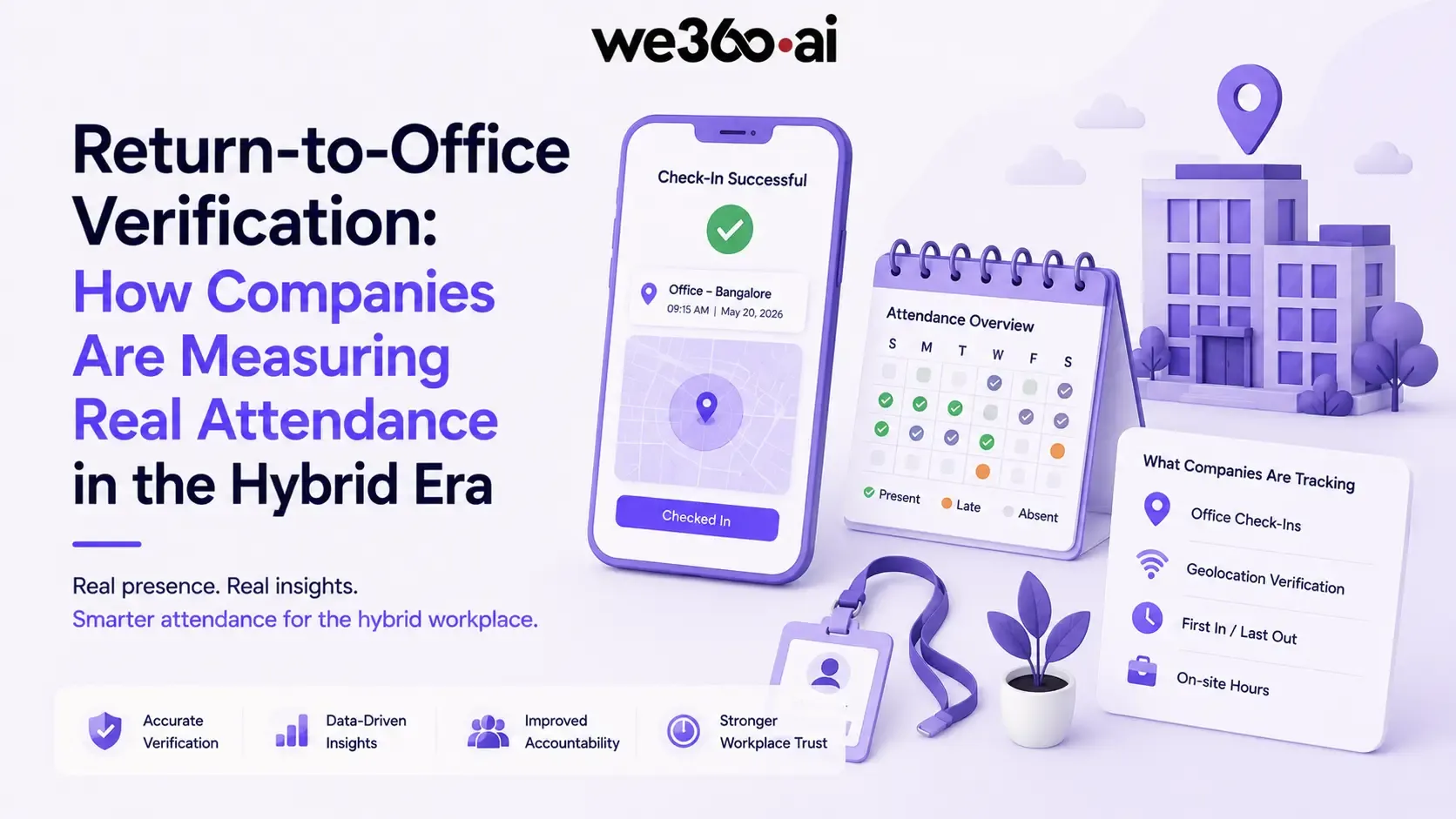
Employee attendance tracking is evolving with flexible and remote work. Explore modern tools and simple ways to track hours, productivity, and attendance transparently.
Explore the best AI meeting assistants in 2026 for transcription, summaries, live captions, and meeting notes. Compare pricing, free plans, features, and privacy to find the right tool.
Explore the 12 best automation tools for teams in 2026, from open-source platforms to AI-powered workflow builders. Compare pricing, features, and use cases to find the right automation tool for your team.
Productivity Without Big Brother.webp?v=2026-08-22T07%3A23%3A14.411Z)
AI has moved beyond experimentation in 2026, with 58% of employees now intentionally using AI at work. Explore the latest AI workplace statistics, benefits, risks, and trends shaping the future of work.