







Summarize With AI


Most engagement surveys fail before anyone reads a single response. They get built around generic questions, sent once a year with no follow-up, and then filed away when leadership gets busy. That pattern is common enough that employees have a name for it: survey fatigue. This guide walks through how to design, run, and act on an employee engagement survey so it actually changes something, with the real benchmarks and tools behind each step.
We360.ai works with more than 120,000 users across 10,000-plus companies in 21-plus countries, and the pattern we see over and over is simple. Survey data tells you what people say. Behavioral data tells you what's actually happening day to day. The strongest programs use both.
What is an employee engagement survey?
It's a structured set of questions that measures how connected employees feel to their work, their team, and the company's goals, usually scored on a numeric scale so results can be tracked over time. It's different from a satisfaction survey, which asks whether people are content, because engagement measures whether people are motivated to contribute discretionary effort.
What is the Gallup Q12? The Gallup Q12 is a 12-question survey framework Gallup built to measure the workplace conditions that predict performance and retention. It covers things like whether employees know what's expected of them, have the tools to do their job, and have had chances to learn and grow in the past year, rather than asking a single vague "are you happy" question.
Two of the actual Q12 items illustrate the approach: "I know what is expected of me at work" and "This last year, I have had opportunities at work to learn and grow," according to Gallup. Neither question mentions happiness. Both are things a manager can actually act on.
What should the survey measure?
An effective survey measures specific, changeable conditions rather than a single mood score, covering areas like role clarity, manager support, recognition, growth opportunities, and belonging. A survey that only asks "how happy are you at work" gives you a number with no next step attached to it.
What is eNPS? Employee Net Promoter Score (eNPS) is a single-question metric, usually "how likely are you to recommend this company as a place to work," scored from -100 to 100. It's adapted from the customer Net Promoter Score that Fred Reichheld introduced in Harvard Business Review's "The One Number You Need to Grow" back in 2003.
eNPS benchmarks differ slightly by source, but the shape is consistent. Perceptyx puts the global benchmark in the low-to-mid 20s, with scores above 30 signaling strong engagement and above 50 counting as exceptional. Workleap's Officevibe uses a finer scale, where 31 to 60 is "great" and anything below 0 flags real trouble. Use eNPS as a pulse-check number, not your whole survey. It tells you the temperature, not what's causing the fever.
How do you design an engagement survey?
Design an engagement survey around 15 to 25 questions using a consistent 5-point agreement scale, mixing quantitative ratings with one or two open-text questions per section so people can explain the "why" behind a low score. Keep it short enough to finish in under 15 minutes, or completion rates drop fast.
A few concrete rules that hold up in practice:
- Use the same core questions every survey cycle so you can track change over time, not just a snapshot.
- Group questions by theme (manager relationship, growth, recognition, workload) instead of scattering them randomly.
- Add one open-ended question per section: "What's one thing that would make this better?" gets more useful answers than a blank "any other comments" box at the end.
- Pilot the survey with a small group first if this is your first time running one. A confusing question in round one poisons the whole dataset.
Skip demographic questions you don't plan to act on. Asking for department, tenure, and location "just in case" without a plan to segment the analysis just adds friction and raises anonymity concerns for nothing.
How often should you run an engagement survey?
Most companies run a full engagement survey once or twice a year and supplement it with shorter pulse surveys every month or quarter, since annual-only surveys move too slowly to catch problems while they're still fixable. The right cadence depends on company size and how much change the organization is absorbing.
A fast-growing team with high hiring volume benefits from more frequent pulses, since conditions shift every few weeks. A stable, low-turnover team can run fewer, longer surveys and still catch what matters. What doesn't work well in either case is a single annual survey with nothing in between. By the time results come back three months later, the moment to act on them has usually passed.
How do you get a high response rate on an engagement survey?
You get a high response rate by keeping the survey short, guaranteeing anonymity, and communicating clearly why you're asking and what happens with the answers. Response rate is the single biggest predictor of whether survey results actually represent your workforce or just the most vocal 40%.
Culture Amp publishes benchmarks by company size that are worth targeting directly. Companies under 50 employees should aim for an 80-90% response rate as a good minimum. Mid-sized companies around 500 employees typically see 70-80% participation. Larger organizations over 1,000 employees should still expect at least 65% as a lower bound, according to Culture Amp. Anything well below those numbers means your results are skewed, not representative.
Three things move the needle more than anything else: send the survey link directly rather than burying it in a newsletter, give people a real two-week window instead of 48 hours, and have a visible leader (not just HR) explain why the survey matters before it launches.
How do you turn survey results into an action plan?
An action plan turns survey data into two or three specific, owned commitments per team, shared back to employees within a few weeks of the survey closing, not filed away in a slide deck nobody opens again. The plan matters more than the survey itself. Employees don't remember what they were asked. They remember whether anything changed.
A workable process looks like this:
- Share top-line results with the whole company within two weeks, including the uncomfortable scores, not just the good ones.
- Have each manager pick the two lowest-scoring areas for their own team and commit to one concrete action per area.
- Set a follow-up date, 60 to 90 days out, to report back on what actually happened.
- Fold the same core questions into the next survey cycle so people can see the number move.
Skipping step one is the single most common failure mode. A survey that goes out and never comes back with results trains employees to stop answering honestly, or to stop answering at all.
What tools can help run an engagement survey?
Dedicated survey platforms range from lightweight pulse tools to full people-analytics suites, and the right one depends on company size and whether you need engagement data connected to performance and development data too. Culture Amp combines engagement, performance, and development surveys in one platform built for mid-size to large companies. Glint, now part of Microsoft Viva, focuses on continuous listening for larger enterprises. Qualtrics is a broader experience-management platform that handles employee, customer, and product feedback under one roof.
Smaller teams often start lighter. Officevibe, built by Workleap, runs on short weekly pulse questions aimed at managers rather than HR admins. SurveyMonkey works as a low-cost, general-purpose option if you just need to get a first survey out the door without a big platform commitment. For a full side-by-side comparison of features and pricing, see our breakdown of the best engagement survey tools.
What mistakes kill engagement surveys?
The most common mistake is treating the survey as the deliverable instead of the action plan that follows it. A close second is asking the same generic questions every company uses without any plan to act on the answers that come back low.
A few patterns worth naming honestly. Surveys that promise anonymity but let managers see individual-level comments destroy trust the first time someone gets identified. Surveys launched right before layoffs or a reorg get answered defensively, if at all, and the data from that cycle should probably be discarded rather than compared against a normal quarter. And surveys that ask about problems the company has no intention of fixing (compensation is the classic one) just teach people that honesty gets ignored.
How We360.ai supports what surveys can't see
Surveys tell you what people say about their week. They don't tell you what actually happened during it. That gap is where disengagement usually hides, since someone can rate their engagement as a 4 out of 5 and still be quietly checked out for weeks before it shows up anywhere else.
We360.ai gives managers the behavioral half of the picture, tracking real work patterns so a low survey score isn't the first warning sign a team gets. Combined with a well-run engagement survey, that data tells you not just who's disengaged, but when it started and what changed.
Ready to see the behavioral side of your engagement data? Start Free Trial and connect it to your next survey cycle, or book a demo to walk through it with our team first. Full pricing starts at ₹299 per user per month.
What are good example questions for an employee engagement survey? +−
Strong questions are specific and actionable, like "I know what is expected of me at work" or "In the last six months, someone has talked to me about my progress," both drawn from Gallup's Q12 framework. Avoid vague questions like "are you happy here" that give you a score with no clear next step.
How long should an employee engagement survey take to complete? +−
Aim for under 15 minutes and 15 to 25 questions. Longer surveys see completion rates drop sharply partway through, which skews your results toward whoever had the most patience that day, not your full workforce.
Should employee engagement surveys be anonymous? +−
Yes, for the core rating questions. Anonymity is what makes people willing to give an honest low score instead of a safe, polite one. Just be careful that open-text comments in small teams aren't so specific they accidentally identify the person who wrote them.
What's a good employee engagement survey response rate? +−
It depends on company size. Culture Amp recommends 80-90% for companies under 50 employees, 70-80% for mid-size companies around 500 employees, and at least 65% as a lower bound for organizations over 1,000 employees.
What's a good eNPS score? +−
A score in the low-to-mid 20s is a typical global benchmark, per Perceptyx, with anything above 30 signaling strong advocacy. Workleap's Officevibe scale rates 31 to 60 as "great" and treats anything below 0 as a real warning sign.
Related Posts
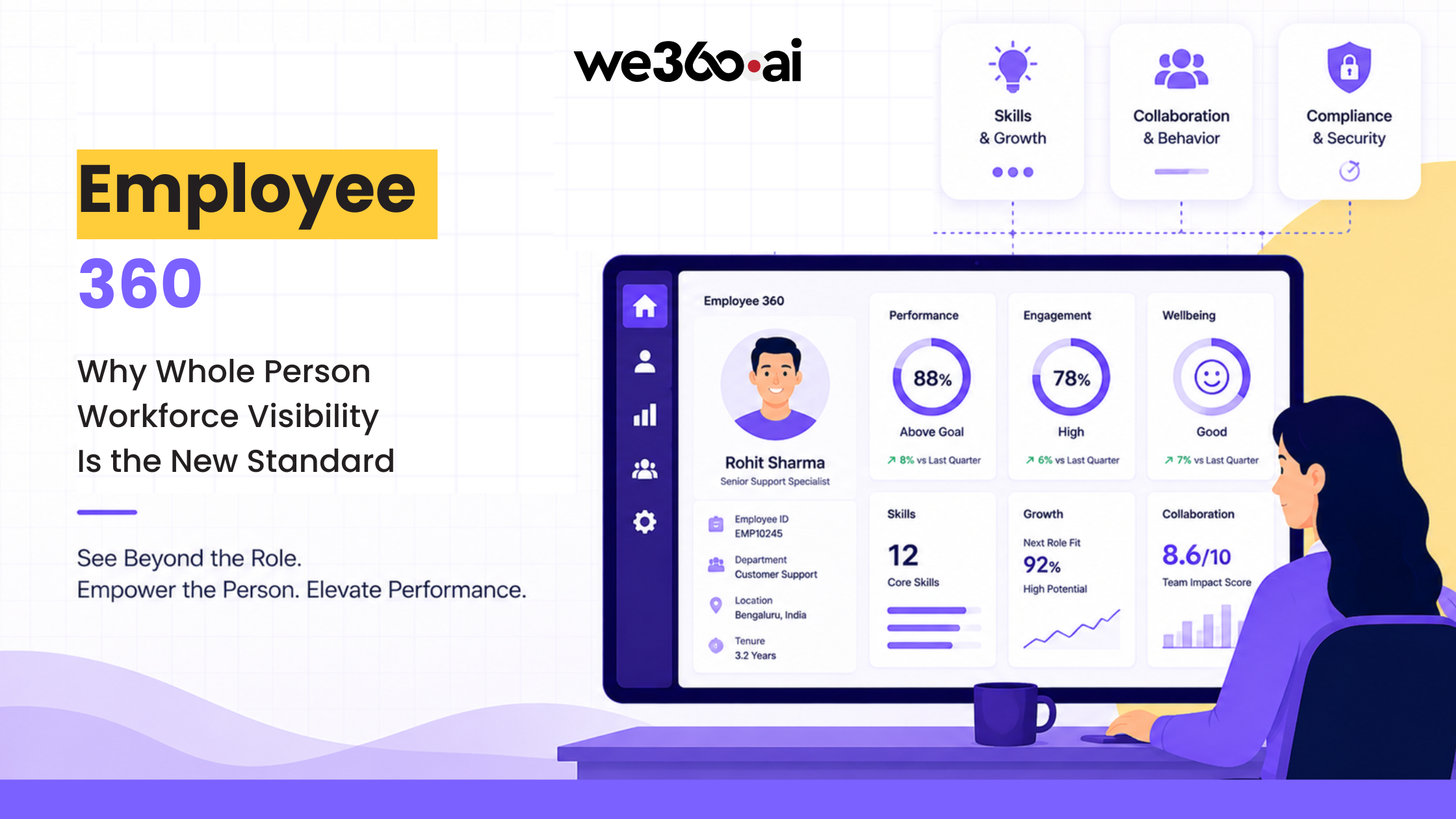
An Employee 360 brings attendance, performance, engagement, learning, and workforce data into one unified view. This 2026 guide explains how Employee 360 works, what data it includes, its benefits for HR teams, and how to implement it effectively while maintaining employee trust and data privacy.

Toxic workplaces rarely become unhealthy overnight. They develop through patterns of poor communication, favoritism, constant blame, unresolved conflict, and fear of speaking up. In this guide, discover the 10 key signs of a toxic workplace, how to spot subtle red flags like gaslighting and workplace cliques, and practical ways to address them.
Employee burnout often shows up in behavior before employees talk about it. Rising overtime, slower responses, more mistakes, reduced participation, and withdrawal can all be early warning signs. This guide covers the key signs of employee burnout, what causes it, and how managers can spot and address burnout before it affects productivity and retention.
High employee turnover can quickly impact productivity, costs, and team stability but what actually counts as “too much”? This guide explains how to measure turnover, identify the warning signs, understand why employees leave, and use workforce analytics to spot retention risks before they become resignations