Employee attendance and tracking are changing as workplaces become more flexible and distributed. This guide looks at how businesses are using modern technology to manage attendance, work hours, remote teams, and productivity. Learn about emerging trends, practical tools, and better ways to track work while keeping processes simple and transparent.
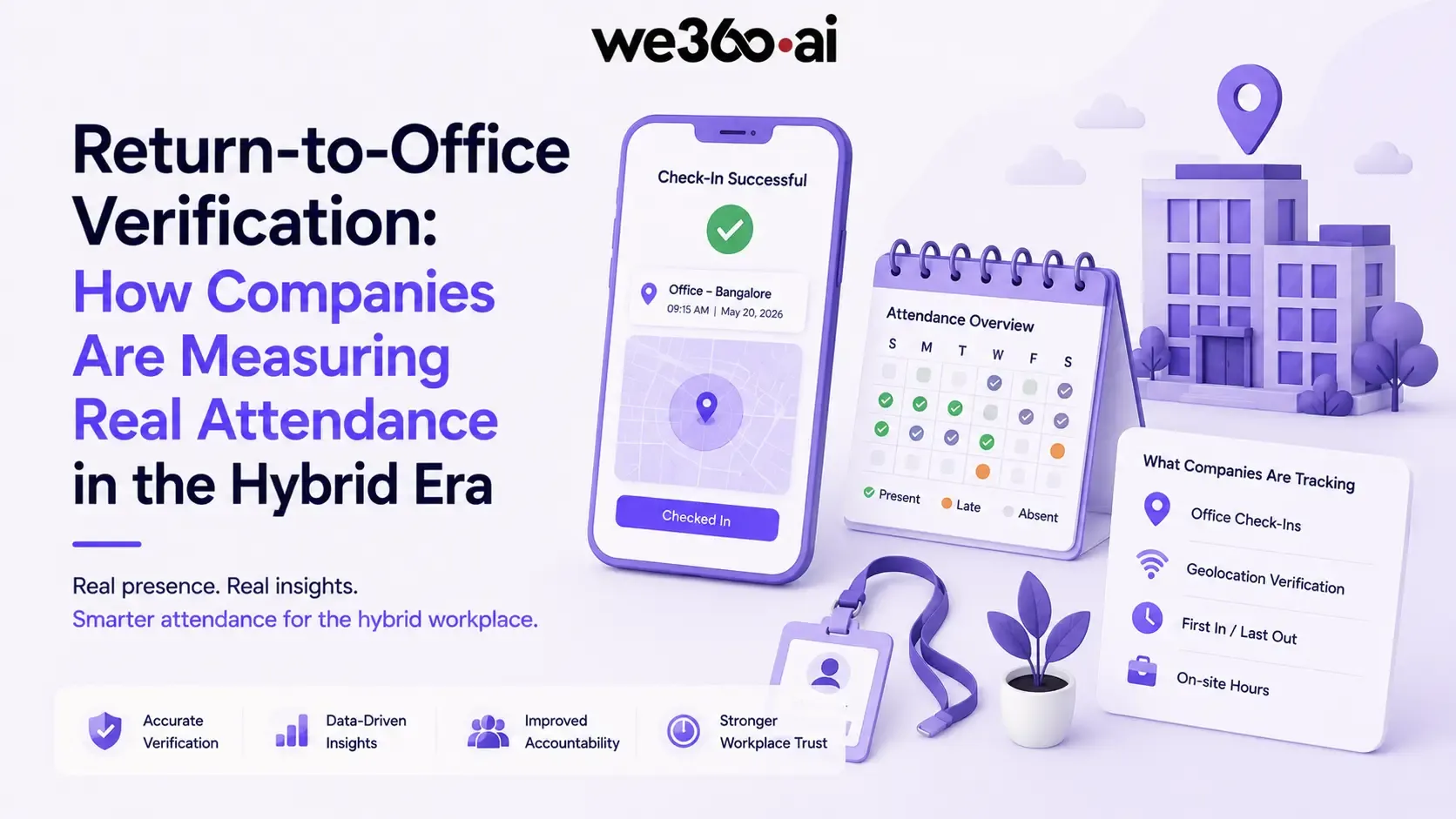
Return-to-office mandates stopped being a debate about "if" a while ago. In 2026, the conversation has moved to a much harder question: how do you actually know whether people are working from the office, or just badging in to check a box? Return-to-office verification means using real attendance and activity data — not just badge swipes — to confirm employees are genuinely present and working during mandated in-office days.
This matters because the badge-swipe era of RTO enforcement is already showing its limits. Nearly 7 in 10 employers now track attendance in some form, up sharply from a year ago, and roughly a third of companies have implemented badge-tracking or occupancy monitoring specifically to enforce RTO policies. But badge data alone is proving to be an easy metric to game — and companies enforcing hybrid mandates in 2026 are having to look past it.
Why Badge Swipes Alone Don't Prove Real Attendance
"Coffee badging" is now a named, recognized problem
The behavior of swiping in, grabbing a coffee to register presence, and then leaving to actually work from home has become common enough to earn its own term: coffee badging. The friction of a commute — often costing an employee real money and an hour of time each way — is, for a lot of employees, simply higher than the value of a quiet desk they weren't going to use anyway. A badge swipe records entry. It says nothing about whether the person stayed, worked, or contributed to the in-office collaboration the policy was designed to create.
Real-world data backs this up
One striking federal case makes the point clearly: pre-mandate data at one large agency showed that among employees who did come into the office, actual in-person work time averaged only about 37% of their working hours — despite badge records showing attendance. In other words, the badge said "present." The actual work pattern said something very different.
Stricter enforcement is running into the same wall
As RTO enforcement has hardened, compliance on badge-based metrics has technically improved — full five-day mandates now show roughly 82% compliance, rising to about 95% when only one or two office days are required per week. But rising badge compliance doesn't necessarily mean rising engagement or output; it can just as easily mean employees are showing up to satisfy the metric being measured, which is exactly the coffee-badging pattern at scale.
The Shift: From Badge Swipes to Real Attendance and Activity Verification
Because badge data is easy to game and expensive to fully trust, companies enforcing RTO in 2026 are layering in additional signals:
Workstation activity data — confirming a laptop was actually logged in and active during in-office hours, not just that a badge cleared a turnstile.
Application and tool usage patterns — distinguishing genuine work sessions from a laptop left open on a desk.
Attendance dashboards tied to performance conversations — roughly a third of companies now factor office presence into performance reviews, which raises the stakes on getting the underlying data right, not just directionally close.
"Anchor day" attendance specifically, not just weekly averages — many companies have moved from a blanket "3 days a week" rule to designated anchor days (often Tuesday/Thursday) where the whole team is expected in together, making attendance verification for those specific days far more important than a loose weekly average.
Manager-level visibility rather than only centralized HR reporting — giving team leads real-time attendance and activity visibility for their own team, rather than a monthly report from facilities or security.
Some large employers have gone further, building dashboards that group employees into attendance categories based on badge frequency and duration — flagging "low-time" or minimal-presence patterns for manager follow-up. The direction is consistent: badge data is being combined with actual usage and activity signals, because badge data alone has already proven to be gameable.
The Retention Risk Behind Getting This Wrong
Verification isn't just an enforcement exercise — it's tied directly to a real attrition risk. Roughly 4 in 10 U.S. workers say they'd consider looking for a new job if forced into a five-day in-office schedule, and more than half of remote-capable employees say they'd actively seek new employment within a year under a full-time return mandate. Even at the executive level, close to a third say they'd consider leaving under a strict full RTO policy. Enforcement that feels like blunt surveillance — rather than a reasonable, transparently measured expectation — is one of the fastest ways to turn an RTO policy into a retention problem instead of a culture win.
This is why the companies handling RTO well in 2026 aren't just cracking down harder — they're building attendance and workspace verification that's accurate enough to be fair, and transparent enough that employees understand exactly what's being measured and why.
What a Well-Built RTO Verification System Should Include
Attendance tied to actual anchor days, not just a loose weekly average that can be satisfied by scattered, low-value office visits.
Activity data alongside badge or check-in data, so "present" actually means logged in and working, not just physically in the building.
Transparent reporting employees can see themselves, rather than a black-box system feeding only into HR or facilities.
Fair, consistent application across teams, since inconsistent enforcement (strict for some functions, loose for others) is one of the fastest ways to create resentment.
A clear link to genuine collaboration goals — the point of anchor days is synchronized in-person work, so verification should ideally reflect whether teams were actually together, not just individually present on the same date.
What is return-to-office verification? Return-to-office verification is the practice of confirming employees are genuinely present and working during mandated in-office days, using attendance and activity data rather than relying solely on badge swipes, which can be satisfied without real engagement.
What is coffee badging? Coffee badging is the practice of an employee swiping into the office, staying briefly (sometimes just long enough to get coffee), and then leaving to work from home for the rest of the day — technically complying with an RTO policy's attendance requirement without actually working from the office.
Do badge swipes accurately measure office attendance? Not reliably on their own. Badge swipes confirm entry and exit but don't confirm how long someone actually stayed, whether they were working, or whether they left shortly after badging in, which is why many companies are now combining badge data with activity or workstation usage data.
What are anchor days in a hybrid work policy? Anchor days are specific, designated days (commonly Tuesday and Thursday) when an entire team or department is expected to be in the office together, intended to maximize in-person collaboration rather than spreading attendance across the week at low density.
Can strict RTO enforcement increase employee turnover? Yes. Survey data shows a meaningful share of remote-capable employees, including a notable share of executives, say they would consider or actively pursue a new job if required to return to the office full-time, making enforcement approach and fairness as important as the policy itself.
Discover 24 of the best tools for managing remote and hybrid teams effectively. Explore platforms for communication, project management, time tracking, collaboration, file sharing, productivity, and employee engagement. Compare essential tools that help teams stay connected, organized, productive, and aligned while working across different locations, schedules, and time zones.
Learn what time theft means, how it happens, and why it matters to businesses. Explore common examples such as inaccurate time reporting, extended breaks, buddy punching, and unauthorized activities. Understand how companies detect time theft using attendance systems, time tracking, and productivity tools while maintaining transparency, fairness, and employee trust.
Learn the common signs that your workplace may be monitoring employee activity and what this means for privacy, transparency, and trust. Understand different types of workplace monitoring, why employers use them, how monitoring can affect employees, and how businesses can create fair, transparent policies that balance productivity with employee trust.
Employee perks can be valuable for both employees and employers when planned thoughtfully. This guide explores how to choose benefits that employees actually value while keeping business goals and budgets in mind. Learn how the right perks can improve satisfaction, engagement, retention, productivity, and workplace culture without unnecessary spending.