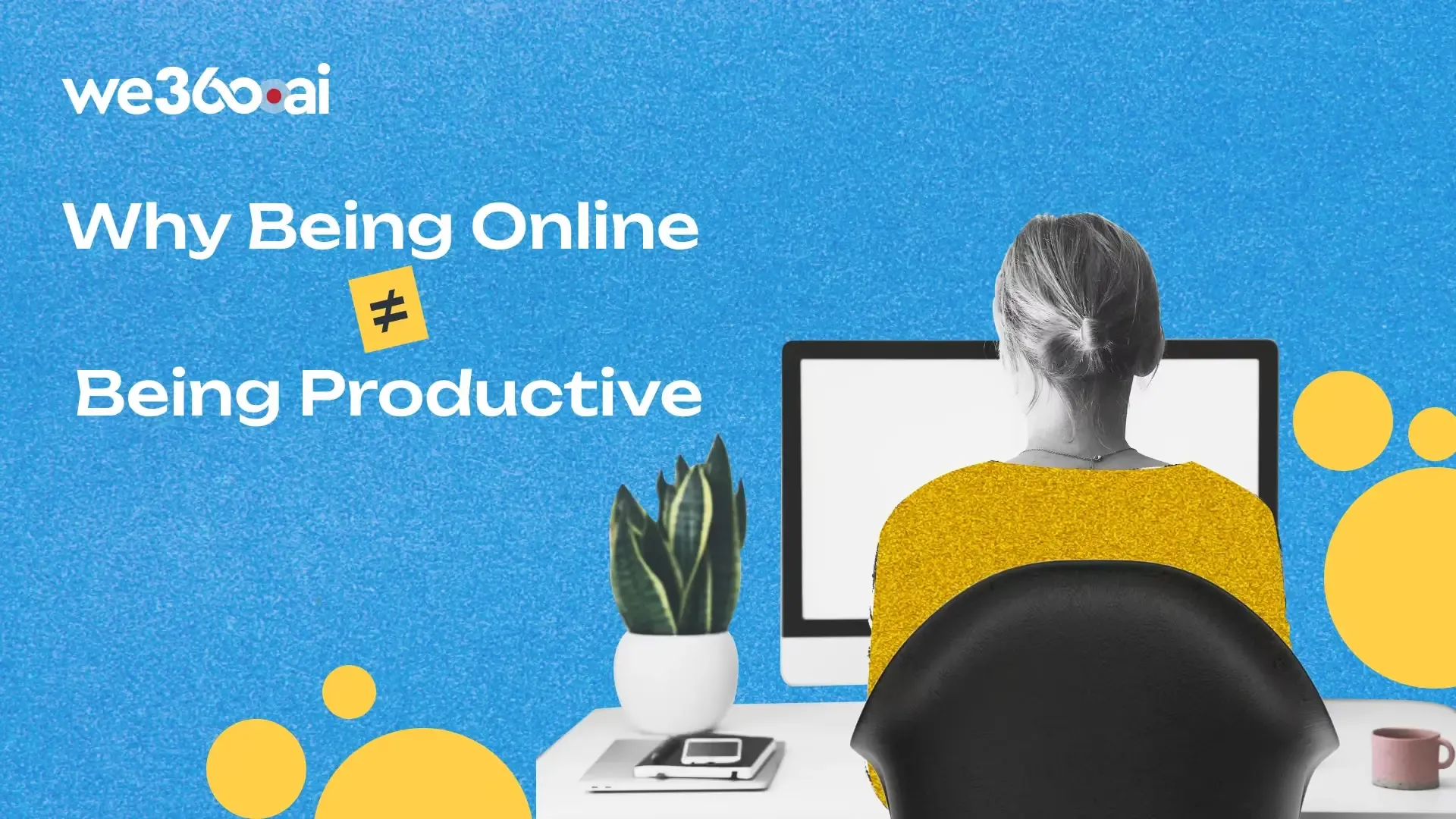
Digital Presenteeism: Why 'Being Online' Isn't the Same as Being Productive
Understand digital presenteeism and why being constantly online does not always mean being productive. Explore how excessive availability, unnecessary meetings, notifications, and screen time can impact focus, employee well-being, and performance. Learn practical strategies to measure meaningful productivity, reduce digital overload, set healthy boundaries, and build more effective work environments.
With the rise of remote work, hybrid workplaces, and digital collaboration tools, organizations are increasingly facing challenges related to employee visibility, online availability, and performance measurement. Digital presenteeism has become a growing concern in modern workplaces, affecting employee wellbeing, productivity, and engagement. By understanding how constant online presence impacts work culture, burnout levels, and long-term performance, businesses can implement healthier work practices, improve workforce management, and build sustainable, high-performing teams.
In today's remote and hybrid work environments, a new workplace phenomenon has emerged: digital presenteeism. This modern challenge is transforming how we think about productivity, employee engagement, and workplace culture. But what exactly is digital presenteeism, and why should organizations be concerned about its impact?
What is Digital Presenteeism?
Digital presenteeism occurs when employees feel compelled to appear visibly "online" or "active" on digital platforms, even when they're not being productive or should be offline. It's the virtual equivalent of traditional presenteeism—where employees physically come to work despite illness, burnout, or personal challenges, simply to be seen at their desks.
In the digital realm, this manifests as:
Responding to messages outside working hours
Maintaining an "active" status on communication platforms
Working longer hours to demonstrate commitment
Attending unnecessary virtual meetings to show face
Engaging in performative digital behaviors that signal availability
This behavior has surged as remote and hybrid work arrangements have become mainstream, with many employees feeling an implicit pressure to prove they're working when out of physical sight.
The Hidden Costs of Digital Presenteeism
While digital presenteeism might create an illusion of productivity, the reality is quite different. Research shows it can significantly impact both employees and organizations in several ways:
Impact on Employee Wellbeing
Digital presenteeism blurs the boundaries between work and personal life, leading to:
Burnout: The constant pressure to be visible online contributes to emotional exhaustion and chronic stress.
Work-life imbalance: The inability to disconnect prevents proper recovery and rejuvenation.
Mental health challenges: Studies show increased rates of anxiety and depression among those who practice digital presenteeism.
Decreased job satisfaction: Employees who feel the need to perform their availability often report lower overall job satisfaction.
Reduced Actual Productivity
Contrary to its appearance, digital presenteeism typically results in:
Decreased focus: Constant interruptions from notifications and messages fragment attention.
Lower quality work: Performative work often sacrifices quality for visibility.
Inefficient time use: Time spent signaling availability could be used for deep, meaningful work.
Decision fatigue: The cognitive load of managing one's online presence takes mental resources away from substantive tasks.
A study by the Harvard Business Review found that employees who focused on appearing busy rather than being productive completed 27% fewer meaningful tasks each week.
Organizational Culture Damage
Beyond individual impacts, digital presenteeism affects entire organizations by:
Eroding trust: When visibility is valued over results, it signals a lack of trust in employees.
Promoting inequality: This practice often disproportionately affects caregivers and those with personal responsibilities.
Reducing innovation: Innovation requires uninterrupted focus and creative thinking, which presenteeism disrupts.
Setting unhealthy precedents: When leaders practice digital presenteeism, it becomes an unofficial cultural expectation.
Why Digital Presenteeism Has Flourished
Understanding the root causes of this phenomenon is critical for addressing it effectively:
The Visibility Gap in Remote Work
Without physical presence, many managers have struggled to adapt their supervision styles, leading to:
Uncertainty about employee productivity
Overreliance on digital signifiers of work
Lack of appropriate remote performance metrics
Technology-Enabled Always-On Culture
Modern workplace tools have created an environment where:
Synchronous communication is the default
Activity status serves as a proxy for productivity
Notifications create constant pressure to respond
Economic Uncertainty and Job Insecurity
In times of economic volatility, employees often feel they must:
Demonstrate additional value to avoid layoffs
Show exceptional commitment through constant availability
Compete with colleagues through visible work presence
Breaking Free: Strategies to Combat Digital Presenteeism
Addressing digital presenteeism requires intentional strategies at both organizational and individual levels:
For Organizations and Leaders
Focus on outcomes, not online hours
Implement results-based performance metrics
Evaluate productivity by deliverables, not digital presence
Set clear expectations about what success looks like
Promote healthy digital boundaries
Establish "core hours" for meetings and collaboration
Discourage after-hours messaging
Model appropriate offline time as leaders
Create a trust-based culture
Assume positive intent about employee work habits
Provide autonomy over when and how work gets done
Use regular check-ins rather than constant monitoring
Implement the right monitoring tools ethically
If using productivity monitoring, focus on work output rather than activity
Be transparent about any monitoring practices
Use monitoring tools to identify burnout and support employees, not to police them
For Employees
Set personal digital boundaries
Establish working hours and communicate them clearly
Use platform settings to show when you're focusing or unavailable
Turn off notifications during deep work
Focus on meaningful contributions
Prioritize quality work over visible activity
Document and communicate your accomplishments regularly
Seek clarity on how your performance is actually evaluated
Practice intentional disconnection
Take regular breaks from digital tools
Schedule completely offline time for deep work
Fully disconnect during vacation and personal time
Measuring True Productivity in the Digital Age
As organizations move beyond digital presenteeism, they need new frameworks for understanding productivity:
Outcome-Based Metrics
Shift focus toward:
Project completion rates
Quality of deliverables
Impact of work on business objectives
Customer or stakeholder satisfaction
Balanced Productivity Indicators
Consider metrics that capture:
Collaboration effectiveness
Innovation and problem-solving
Employee wellbeing and sustainability
Knowledge sharing and team development
Employee Experience Measures
Monitor factors including:
Engagement levels
Work satisfaction
Burnout indicators
Sense of purpose and meaning
The Future of Work: Beyond Digital Presenteeism
Forward-thinking organizations are already reimagining productivity in ways that transcend digital presenteeism:
Asynchronous-First Work Models
These models prioritize:
Documentation over meetings
Thoughtful communication over immediate responses
Flexibility in when work happens
Clear expectations about response times
Focus Time and Deep Work Culture
Progressive companies are implementing:
Designated no-meeting days
Blocked calendar time for concentrated work
Recognition of different work styles and energy patterns
Tools that support focused, uninterrupted work
Holistic Performance Evaluation
This approach incorporates:
Multi-dimensional views of productivity
Peer and cross-functional feedback
Self-assessment components
Long-term impact over short-term visibility
Conclusion: Redefining Productivity for the Digital Era
Digital presenteeism represents an outdated understanding of work that measures value by visibility rather than impact. As remote and hybrid work continue to evolve, organizations have a unique opportunity to redefine productivity in more meaningful and sustainable ways.
By focusing on outcomes rather than online presence, establishing healthy digital boundaries, and creating cultures of trust, companies can combat digital presenteeism while simultaneously improving both wellbeing and genuine productivity.
The most successful organizations in the coming years will be those that recognize that being constantly online doesn't equal being productive—and that true productivity flourishes when employees are empowered to work in ways that maximize their effectiveness rather than their visibility.
Is your organization struggling with digital presenteeism? We360.ai offers productivity solutions that focus on meaningful work outcomes rather than superficial activity metrics. Our ethical approach to productivity measurement helps organizations build cultures of trust while gaining valuable insights into genuine productivity patterns.
Discover the common causes of low productivity and practical ways to fix them. Learn how poor time management, unclear goals, distractions, burnout, ineffective communication, workload issues, and outdated processes affect performance. Explore actionable strategies businesses and employees can use to improve focus, efficiency, engagement, and overall workplace productivity without creating unnecessary pressure.
Discover 15 practical productivity hacks that actually work in 2026. Learn how to improve focus, manage time, prioritize tasks, reduce distractions, use technology effectively, and build better work habits. These actionable strategies can help employees and teams work smarter, stay organized, boost efficiency, and achieve better results without unnecessary stress.
Learn the difference between proactive and reactive work habits and why being proactive can improve productivity, decision-making, and workplace performance. Discover practical strategies to anticipate challenges, prioritize tasks, plan ahead, manage time effectively, reduce distractions, and build proactive habits that help employees and teams work smarter, stay organized, and achieve better results.
Learn how different working styles influence communication, collaboration, productivity, and team performance. Discover how to identify individual work preferences, manage diverse personalities, improve teamwork, reduce workplace friction, and create an inclusive environment. Explore practical strategies for managers to support a mixed team and help every employee work effectively.