Cost-cutting sounds simple.
Spend less, save more, improve margins.
In reality, it’s where many businesses quietly lose momentum.
Companies slash budgets, freeze hiring, and trim “non-essential” expenses. On paper, costs go down. But behind the scenes, productivity drops, teams feel stretched, and growth slows to a crawl. What looked like a smart financial move turns into a long-term setback.
That’s the problem with cost-cutting without a strategy. It doesn’t just remove waste. It often removes value.
In 2026, this challenge is sharper than ever. Businesses are operating in a landscape shaped by rising operational costs, distributed teams, increasing SaaS dependencies, and constant pressure to do more with less.
Leaders are expected to reduce expenses without sacrificing performance, employee experience, or innovation. That balance is hard to get right.
The companies that succeed aren’t the ones cutting the most. They’re the ones cutting smart.
They don’t ask, “Where can we spend less?”
They ask, “Where are we wasting resources, and how can we optimize them?”
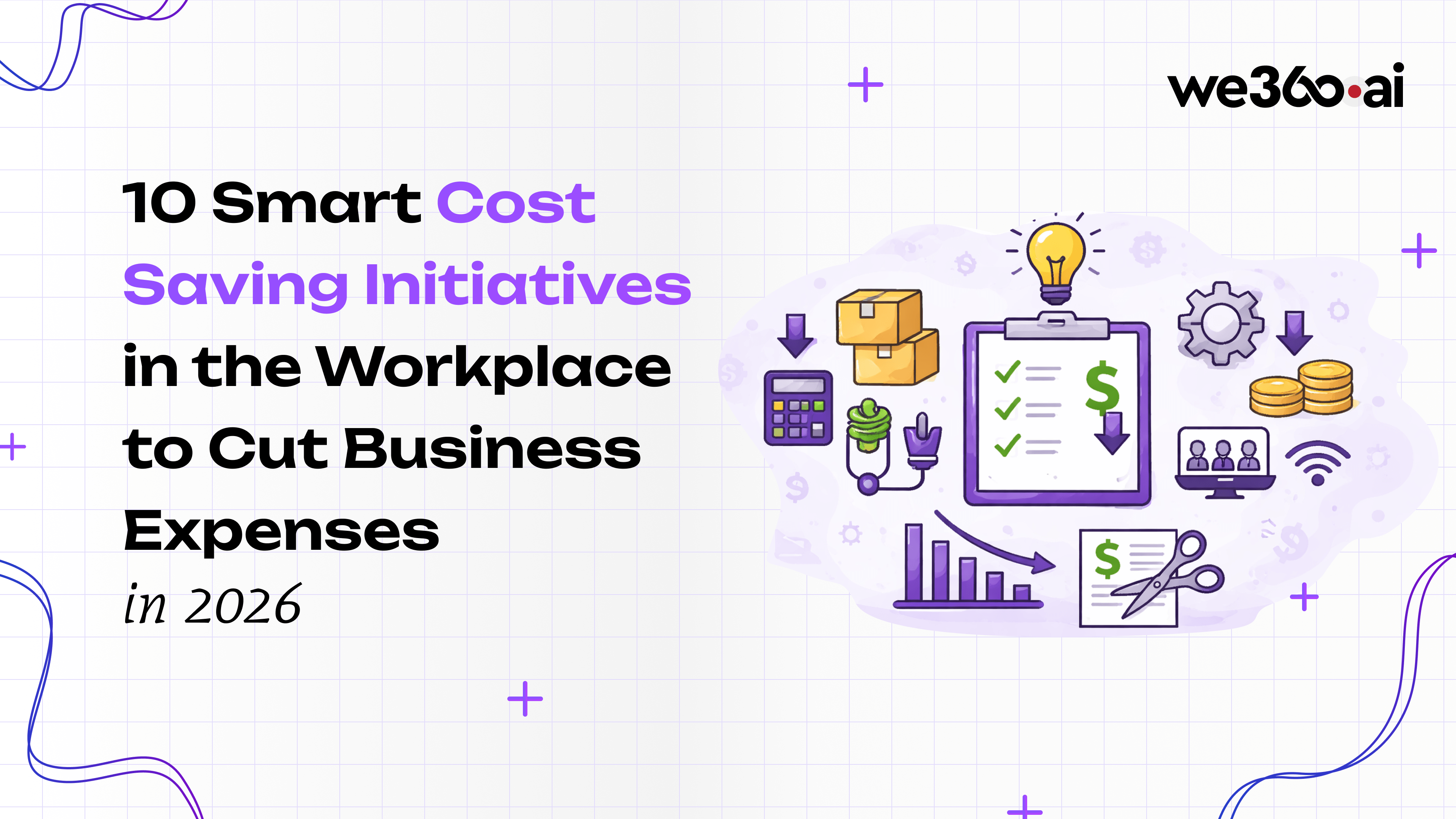
This is where cost-saving initiatives come in. Not as reactive measures, but as strategic levers to improve efficiency, strengthen operations, and unlock sustainable growth.
Let’s understand everything in this blog further.
What Are Cost-Saving Initiatives?
Cost-saving initiatives are structured, intentional actions businesses take to reduce expenses while maintaining or improving performance.
They’re not about cutting costs randomly or reacting to financial pressure. Instead, they focus on identifying inefficiencies, eliminating waste, and using resources more effectively across the organization.
A simple way to think about it:
- Cost-cutting removes expenses.
- Cost-saving initiatives improve how money is spent.
For example, replacing manual processes with automation doesn’t just reduce labor costs. It also speeds up work, reduces errors, and frees up employees for higher-value tasks. That’s a cost-saving initiative.
The goal isn’t just to spend less. It’s to get more value from every rupee the business invests.
When done right, these initiatives help companies operate leaner, make smarter decisions, and stay competitive without compromising productivity or growth.
Difference Between Cost-Cutting and Cost Optimization
At first glance, cost-cutting and cost optimization may seem like the same thing. Both aim to reduce expenses. But the approach and outcomes are very different.
Cost-cutting is reactive.
It focuses on reducing expenses quickly, often during financial pressure. This usually involves actions like budget cuts, layoffs, or eliminating tools and resources. While it can deliver short-term savings, it often comes at the cost of productivity, employee morale, and long-term growth.
Cost optimization, on the other hand, is strategic.
It focuses on spending smarter, not just spending less. The goal is to maximize value from every resource while maintaining or even improving performance. Instead of removing resources, it improves how they are used.
Here’s a simple way to understand the difference:
- Cost-cutting: “What can we remove to save money right now?”
- Cost optimization: “How can we use our resources more efficiently for better results?”
For example, cutting your marketing budget is cost-cutting.
Shifting from paid ads to high-performing organic channels like SEO is a cost optimization.
The key difference lies in impact. Cost-cutting often solves immediate problems but can create bigger ones later. Cost optimization builds a stronger, more efficient business over time.
In 2026, companies that focus on optimization over cutting are the ones that stay agile, competitive, and profitable without sacrificing performance.
Why Cost-Saving Initiatives Are Critical for Large Companies
As companies grow, complexity grows with them: more teams, more tools, more processes, and more layers of decision-making. While scale brings opportunity, it also brings inefficiency. That’s why cost-saving initiatives are not optional for large companies. They are essential.
Waste Increases with Scale
In large organizations, small inefficiencies rarely stay small.
Unused software licenses, duplicated tools, unnecessary meetings, and underutilized employee time can quietly pile up across departments. What looks insignificant in one team can turn into a major cost when multiplied across hundreds or thousands of employees.
Without a clear system to track and optimize these areas, waste becomes embedded in daily operations.
Impact on Profitability and Cash Flow
Even minor cost improvements can have a significant impact at scale.
Reducing operational inefficiencies directly improves margins without needing to increase revenue. It also frees up cash flow, giving companies more flexibility to invest in growth, innovation, or strategic initiatives.
In many cases, improving efficiency is faster and more controllable than trying to generate new revenue.
Competitive Advantage Through Efficiency
Large companies don’t just compete on products or services anymore. They compete on how efficiently they operate.
Organizations that manage costs intelligently can price more competitively, reinvest savings into innovation, and adapt faster to market changes. Efficiency becomes a silent advantage that compounds over time.
Key Benefits of Cost-Saving Initiatives
- Improved Margins: Reducing unnecessary expenses directly increases profitability without additional sales pressure.
- Better Resource Allocation: Money, time, and talent are redirected toward high-impact activities instead of being wasted on low-value tasks or tools.
- Increased Operational Agility: Lean and efficient operations make it easier to adapt, scale, and respond to changes without being slowed down by unnecessary costs or rigid systems.
For large companies, cost-saving initiatives aren’t just about controlling expenses.
They’re about building a smarter, more resilient organization that can grow sustainably without carrying hidden inefficiencies.
10 Cost-Saving Initiatives for Companies (That Actually Work)
Most companies already try to cut costs. The problem is, they focus on the obvious areas and miss the real leaks.
The initiatives below aren’t theoretical. They’re practical, proven, and designed to reduce costs without slowing your business down.
Audit and Reduce Unnecessary Overhead Costs
Start with visibility.
Many businesses carry hidden expenses for years. Duplicate tools, unused subscriptions, excessive vendor costs, or outdated processes quietly drain budgets.
A structured audit helps you answer simple but powerful questions:
- Are we paying for things we don’t use?
- Are there cheaper or better alternatives?
- Are we overpaying vendors?
Even a basic audit can uncover 10–20% in avoidable overhead.
Leverage Automation for Operational Efficiency
Manual work is expensive and error-prone.
Automation reduces repetitive tasks like data entry, reporting, approvals, and follow-ups. This not only cuts labor costs but also speeds up execution and improves accuracy.
Instead of hiring more people to scale operations, automation allows your existing team to do more with less effort.
Shift to Hybrid or Remote Work Models
Office space is one of the highest fixed costs for large companies.
Moving to hybrid or remote setups reduces expenses on rent, utilities, infrastructure, and maintenance. At the same time, it gives employees flexibility, which can improve productivity and retention.
The key is not just going remote, but managing it effectively with the right systems in place.
Use Workforce Analytics to Optimize Productivity
You can’t optimize what you don’t measure.
Workforce analytics helps you understand how time is actually being spent across teams. It highlights underutilized hours, productivity gaps, and inefficiencies in workflows.
Instead of guessing, you make decisions based on real data. This leads to better output without increasing headcount.
Build a Cost-Conscious Work Culture
Cost-saving isn’t just a finance function. It’s a company mindset.
When employees understand how their daily decisions impact costs, they naturally become more mindful. This could be as simple as avoiding unnecessary tools, reducing wasted time, or improving how resources are used.
Small behavioral changes across a large workforce create significant savings over time.
Optimize Marketing with SEO and Organic Channels
Paid marketing delivers quick results, but it’s expensive and stops the moment you stop spending.
Investing in SEO and organic channels builds long-term visibility. Once your content ranks, it continues to bring in traffic and leads without ongoing ad spend.
Over time, this reduces customer acquisition costs and improves marketing ROI.
Centralize Procurement for Bulk Savings
Decentralized purchasing leads to inconsistent pricing and missed savings opportunities.
By centralizing procurement, companies can negotiate better deals, standardize vendors, and take advantage of bulk pricing.
It also reduces duplication and brings more control over spending.
Eliminate Redundant Software and Tools
Most companies are paying for more software than they actually use.
Different teams often adopt similar tools without coordination. The result is overlapping subscriptions, low usage, and unnecessary SaaS costs.
Regularly reviewing software usage helps you identify what’s essential and what can be removed or consolidated.
Invest in Employee Retention and Wellbeing
Cutting costs by reducing employee benefits or ignoring well-being often backfires.
High attrition is expensive. Hiring, onboarding, and training new employees cost far more than retaining existing ones.
Investing in employee satisfaction, work-life balance, and growth reduces turnover and protects productivity.
Use Benchmarking to Drive Smarter Decisions
Without benchmarks, it’s hard to know if you’re overspending or operating efficiently.
Comparing your costs, productivity, and processes against industry standards or competitors helps you identify gaps.
Benchmarking gives you a clear direction on where to optimize and where you’re already performing well.
How We360.ai Supports Cost Reduction Initiatives
Considering the cost-saving initiatives, it only works when they are backed by the right data and consistent visibility. Without that, most of the decisions are nothing but just assumptions, and that will lead to wrong cuts.
That’s where We360.ai plays an important role.
It provides the business with a clear and real-time vision and provides the work that actually happens across the teams.
Let’s understand how!
Track Employee Productivity in Real Time
Instead of relying on reports or guesswork, We360.ai shows exactly how time is being spent during work hours.
You can see productive vs non-productive time, active work patterns, and overall team performance. This level of visibility helps managers make informed decisions rather than reactive ones.
Identify Underutilized Time and Improve Output
In most organizations, a significant portion of paid time goes underutilized. The challenge is identifying where.
We360.ai highlights gaps in productivity, allowing teams to address inefficiencies and improve output without increasing workload or hiring more people.
Monitor Software Usage
Companies often invest heavily in tools, but not all of them are used effectively.
We360.ai tracks which applications are actively used and which are sitting idle. This helps businesses understand whether their software investments are actually delivering value.
Eliminate Unused Tools and Reduce SaaS Costs
Once you have visibility into software usage, it becomes easier to cut unnecessary subscriptions.
By removing redundant or underused tools, companies can significantly reduce SaaS expenses without affecting operations.
Analyze Work Patterns
Not all productivity issues are obvious.
We360.ai provides insights into daily and weekly work patterns, helping you understand when teams are most productive, where time is being lost, and how workflows can be improved.
Optimize Schedules and Reduce Inefficiencies
With better visibility into how time is spent, managers can restructure schedules for maximum efficiency.
This could mean redistributing workloads, adjusting shift timings, or eliminating bottlenecks that slow down execution.
Reduce Unnecessary Meetings
Meetings are one of the highest hidden costs in any organization.
We360.ai helps identify time spent in meetings versus actual focused work. This makes it easier to cut down on unnecessary discussions and create more space for deep, productive work.
Balance Focus Time vs Collaboration
Too much collaboration can be just as harmful as too little.
We360.ai helps teams strike the right balance by highlighting how much time is spent on focused tasks versus collaborative activities. This ensures that productivity doesn’t get lost in constant communication.
Improve Remote Workforce Efficiency
Managing remote teams comes with its own challenges, especially around visibility and accountability.
We360.ai provides a transparent view of remote work activity, helping businesses maintain productivity without micromanagement.
Ensure Productivity Without Increasing Overhead
The biggest advantage is simple: you improve performance without adding extra costs.
By using real data to optimize time, tools, and workflows, companies can scale efficiently while keeping expenses under control.
At its core, We360.ai doesn’t just help you track work. It helps you understand it.
And when you truly understand how your organization operates, cost reduction becomes smarter, more precise, and far more effective.
Common Mistakes Companies Make While Cutting Costs
Cost reduction can strengthen a business or quietly damage it. The difference usually comes down to how decisions are made.
Here are the most common mistakes companies make when trying to cut costs and why they often backfire.
Cutting Essential Resources
In an effort to save money quickly, companies often cut too deeply.
They reduce budgets for critical tools, skilled employees, or core operations. While this may show immediate savings, it usually leads to slower execution, lower quality output, and missed opportunities.
Not all costs are waste. Some are what keep the business running effectively. Removing them weakens the foundation.
Ignoring Employee Impact
Cost-cutting decisions don’t just affect numbers. They affect people.
Increased workload, reduced benefits, or constant pressure to “do more with less” can lead to burnout, low morale, and higher attrition.
When employees disengage, productivity drops. And the cost of replacing talent often outweighs the savings from initial cuts.
Short-Term Thinking
Many cost-cutting measures are driven by immediate financial pressure.
The focus stays on quick wins instead of long-term value. This leads to decisions like cutting training programs, reducing marketing efforts, or delaying important investments.
While these moves save money now, they can slow down growth and create higher costs in the future.
Lack of Data-Driven Decisions
One of the biggest mistakes is cutting costs without clear data.
Decisions are often based on assumptions like “this tool isn’t useful” or “this team isn’t productive” without actual insights to back them up.
This approach leads to wrong cuts and missed opportunities for real optimization.
Data-driven decisions, on the other hand, help identify where money is truly being wasted and where it’s actually driving value.
Cost reduction isn’t just about what you cut. It’s about what you choose to keep and optimize.
Avoiding these mistakes ensures that your efforts don’t just reduce expenses but also protect productivity, performance, and long-term growth.
Best Practices for Implementing Cost Reduction Initiatives
Cost reduction works best when it’s treated as an ongoing strategy, not a one-time action. The goal isn’t just to spend less. It’s to build a business that runs efficiently without slowing down growth.
Here are the practices that make cost-saving initiatives actually work in the real world.
Focus on Long-Term Value, Not Quick Cuts
Quick cuts are tempting, especially under pressure. But they often create bigger problems later.
Instead of asking, “What can we remove right now?” ask, “What will make us more efficient over time?”
Investments in automation, better tools, or employee development may not reduce costs immediately, but they deliver stronger and more sustainable savings in the long run.
Use Data to Guide Decisions
Guesswork is expensive.
Clear data should back every cost-related decision. This includes understanding where time is spent, which tools are actually used, and which processes are inefficient.
When decisions are data-driven, you avoid cutting the wrong areas and focus only on what truly needs optimization.
Align Cost-Saving with Business Goals
Cost reduction should never happen in isolation.
Every initiative should support a larger business goal, whether it’s improving profitability, scaling operations, or enhancing customer experience.
When cost-saving aligns with strategy, it strengthens the business instead of restricting it.
Involve Employees in the Process
Employees are closest to day-to-day operations. They often know where time, effort, and resources are being wasted.
Involving them in the process not only uncovers practical ideas but also builds trust and accountability. Instead of feeling like cost-cutting is being imposed on them, they become part of the solution.
Continuously Monitor and Optimize
Cost reduction isn’t a one-time fix. It’s an ongoing process.
What works today may not work six months from now. Tools, teams, and workflows evolve, and so should your approach to managing costs.
Regular monitoring helps you stay in control, identify new inefficiencies, and keep improving over time.
When these best practices are followed, cost reduction stops being reactive. It becomes a structured, strategic advantage.
And that’s what separates companies that struggle with costs from those that consistently stay efficient, agile, and profitable.
Conclusion
Cost reduction isn’t about cutting deeper. It’s about cutting smarter.
The companies that thrive in 2026 are not the ones aggressively slashing budgets. They’re the ones building efficient systems, using data to guide decisions, and making sure every resource delivers real value.
When done right, cost-saving initiatives don’t just improve margins. They strengthen operations, empower teams, and create room for sustainable growth.
The real advantage comes from visibility. When you can clearly see how time, tools, and effort are being used, you stop guessing and start optimizing.
That’s exactly where We360.ai makes a difference.
It helps you uncover hidden inefficiencies, reduce wasted effort, and improve productivity without increasing overhead.
If you’re serious about cutting costs without hurting performance, it’s worth exploring how the right insights can change the way your business operates.