







Summarize With AI


Most recognition programs fail quietly. Someone buys a platform, rolls it out with a launch email, and six months later nobody's used it since week three. The programs that actually work share a few traits the failed ones don't, and this guide breaks down what those are, with real tool names, real numbers, and what to skip if you're running this on a small-company budget.
We360.ai works with more than 120,000 users across 10,000-plus companies in 21-plus countries, and the recognition data we see from customers backs up the research below: recognition that's specific and frequent beats recognition that's generous and rare.
What are employee recognition programs?
They're structured systems for acknowledging good work, ranging from a free Slack shoutout channel to a paid platform with points, redeemable rewards, and manager dashboards. The format matters less than the consistency. A program used once a quarter barely counts as a program at all.
What's the difference between recognition and rewards? Recognition is the acknowledgment itself, a thank-you, a shoutout, an award. A reward is the tangible thing attached to it, like a gift card or bonus points. Programs can run on recognition alone, but pairing it with a small reward usually raises participation.
Only 1 in 3 US workers strongly agree they've received recognition for good work in the past seven days, according to Gallup. That gap is exactly what a real program closes, and it closes cheaper than most people expect.
What's the actual ROI of employee recognition programs?
Recognition's ROI shows up first in retention, then in mental health and engagement metrics that predict retention months in advance. Employees who received high-quality recognition in 2022 were 45% less likely to have left their job by 2024, based on a longitudinal study of roughly 3,400 employees from Workhuman and Gallup.
Recognition also protects against burnout in a way most wellness programs don't. Employees who strongly agree they receive adequate recognition are 37% less likely to be actively job hunting, and those getting the right amount of recognition are 30% less likely to experience burnout, per the same Workhuman and Gallup research. The effect is even larger for specific groups: women who feel adequately recognized are 63% less likely to report burnout, and authentic recognition makes Black and Hispanic employees 7 times more likely to feel a real sense of belonging at work.
The benefit isn't one-directional either. Giving recognition, not just receiving it, is linked to 57% lower odds of burnout and 24% lower odds of probable anxiety in the person doing the recognizing, according to O.C. Tanner's 2025 Global Culture Report. A recognition habit protects the manager giving it almost as much as the employee receiving it.
An older but still commonly cited SHRM and Globoforce survey found 82% of HR professionals said their recognition program positively affected engagement, with 54% reporting improved retention. That data is from 2012, so treat it as directional history rather than a current benchmark, useful context for how long this evidence has been building.
Employee recognition program examples
Real-world examples range from a free public shoutout channel to enterprise platforms with points, redeemable catalogs, and service milestones. The right example depends on budget and team size more than industry.
- Peer-to-peer shoutout channel. A dedicated Slack or Teams channel where anyone can publicly thank a colleague. Free, and it works because recognition becomes visible to the whole team, not just a manager-employee exchange.
- Points-based platforms. Tools like Bonusly and Nectar let employees give each other points tied to company values, redeemable for gift cards or merchandise.
- Milestone and service awards. Recognizing tenure at 1, 5, and 10 years, still common in manufacturing and healthcare, where retention is measured in decades, not quarters.
- Manager spot bonuses. Small, immediate cash or gift card awards a manager can issue without approval friction, used for a specific action right after it happens.
- All-hands recognition moments. A few minutes at the start of a weekly or monthly meeting dedicated to naming specific wins, cheap and effective when it's kept genuinely specific instead of generic praise.
Rewards and recognition programs
Rewards and recognition programs pair the social acknowledgment of good work with a tangible incentive, usually points, gift cards, or catalog redemptions, layered on top of a recognition moment rather than replacing it. The reward isn't the point. It's the multiplier on a recognition habit that should exist either way.
Platforms in this space include Motivosity, Achievers, Workhuman, and WorkTango, which absorbed the former Kazoo platform in 2022. Blueboard takes a different angle, offering experience-based rewards like classes or trips instead of points and merchandise, aimed at companies that want recognition to feel memorable rather than transactional.
Pick the reward type based on what your team actually values. A points catalog works well for distributed teams who want choice. An experience-based reward works better for smaller, close-knit teams where a shared memory means more than a gift card balance.
Recognition programs for small companies
Small companies can run an effective recognition program without buying software, using a public channel, a consistent weekly cadence, and small manager-approved spot bonuses instead of an enterprise platform nobody will maintain. Budget isn't the real constraint. Consistency is.
A workable setup for a team under 50 people: a public Slack channel for peer shoutouts, a five-minute recognition slot at the start of your weekly team meeting, and a small discretionary budget, even $20 to $50 a month per manager, for spot bonuses tied to something specific. That last part matters most. "Great job this week" recognizes nothing. "Your fix on the checkout bug saved us a weekend of support tickets" recognizes something real.
Skip the platforms built for thousands of employees. A 30-person company running Bonusly at enterprise pricing usually gets less real usage than the same team running a free Slack channel with a manager who actually shows up to it every week.
Employee recognition program names and words
A good program name is specific to your company's actual culture, not a generic label borrowed from a vendor's marketing page. "Kudos Corner," "The Shoutout Channel," or a name tied to an internal joke or value tends to get used more than something formal like "Employee Excellence Initiative."
The words matter as much as the name. Specific recognition, naming the exact action and its impact, consistently lands better than generic praise. Compare "thanks for your hard work" against "thanks for catching that pricing bug before it hit production, that saved us a rough week." The second version tells the recipient exactly what to keep doing, which is the entire point of recognition in the first place.
How do you measure whether a recognition program is working?
A recognition program is working if participation stays steady month over month and if recognition volume tracks with retention and engagement scores over time, not just in the first few weeks after launch. A spike at rollout and a flatline by month three means the program failed, regardless of how good the launch email was.
Track three things specifically: the percentage of employees who've given or received recognition in the past 30 days, whether recognition is concentrated in a few people or spread across the team, and whether recognized employees show measurably lower voluntary turnover than the rest of the company over the following year. If you're already running an employee engagement survey, add one or two direct questions about recognition frequency rather than assuming your points-platform dashboard tells the whole story.
How We360.ai supports recognition that actually lands
We360.ai gives managers an objective record of who's actually doing the work worth recognizing, so recognition goes to real contribution instead of whoever's most visible in the office or the loudest in standup. That matters more than it sounds. A disengaged employee who's quietly carrying a team gets missed constantly by recognition programs that run on manager memory alone.
The same data that flags early burnout and rising attrition risk also tells you who's been underappreciated for months, which is often the same person about to quietly hand in notice. Recognition backed by real activity data catches both problems with the same signal.
Ready to see what your team's actual contribution data looks like? Start Free Trial and pull your first activity report this week, or book a demo if you'd rather walk through it with our team. Full pricing starts at ₹299 per user per month.
What are some good employee recognition programs? +−
Bonusly, Nectar, Achievers, Workhuman, and WorkTango are commonly used platforms, each pairing peer recognition with redeemable points or rewards. For smaller teams, a free public shoutout channel paired with a consistent weekly recognition habit often outperforms an underused paid platform.
What are examples of employee reward programs? +−
Points-based platforms like Bonusly redeemable for gift cards, manager-issued spot bonuses for specific wins, service milestone awards at tenure anniversaries, and experience-based rewards like Blueboard's trips and classes instead of standard merchandise catalogs.
How much does an employee recognition program cost? +−
Points-based platforms typically run a few dollars per employee per month plus the redemption budget itself. A free option, a Slack channel with a manager-funded spot bonus budget of $20 to $50 a month, works well for teams under 50 people.
Do employee recognition programs actually improve retention? +−
Yes. Employees who received high-quality recognition in 2022 were 45% less likely to have left their job by 2024, according to a Workhuman and Gallup longitudinal study covering roughly 3,400 employees.
How often should employees be recognized at work? +−
Weekly recognition works better than quarterly or annual awards, since only 1 in 3 US workers currently say they've been recognized in the past seven days, per Gallup, and that gap directly predicts who's likely to quit.
Related Posts
Explore the latest hot desking and flexible workspace trends shaping workplaces in 2025–2026. Learn how businesses are using shared desks, flexible office layouts, workplace technology, and hybrid work strategies to optimize space, reduce costs, improve collaboration, enhance employee experience, and create more adaptable, productive, and future-ready work environments.
A well-designed employee engagement survey can reveal what employees really think about their roles, managers, recognition, growth, and workplace culture. This guide explains what to ask, how often to survey employees, how to improve response rates, and how to turn survey results into meaningful workplace action.
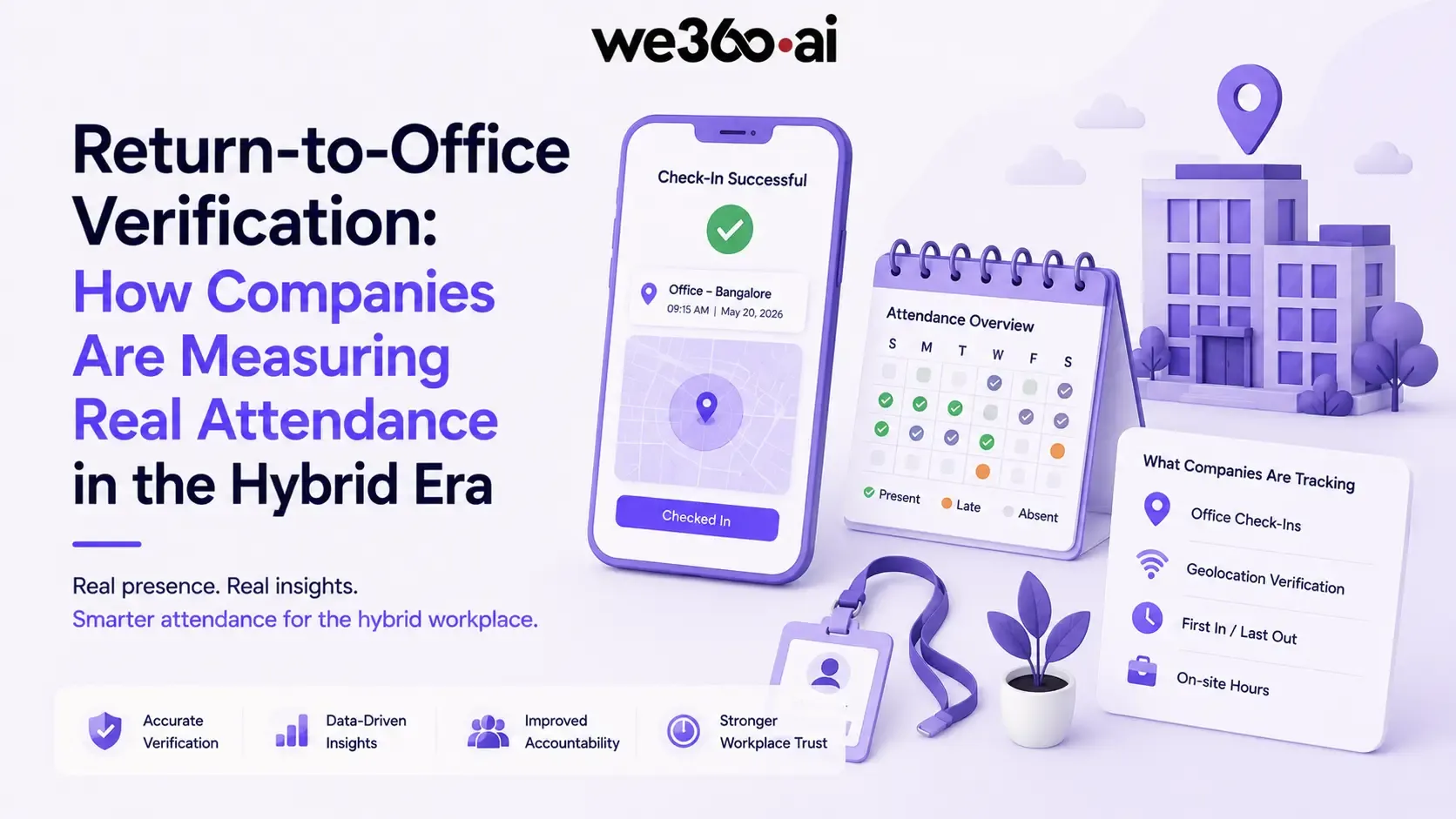
Employee attendance and tracking are changing as workplaces become more flexible and distributed. This guide looks at how businesses are using modern technology to manage attendance, work hours, remote teams, and productivity. Learn about emerging trends, practical tools, and better ways to track work while keeping processes simple and transparent.
Looking for a Reddit alternative in 2026? Explore 12 platforms for online discussions, niche communities, tech forums, real-time conversations, and local groups. Find the right platform based on your interests and community needs.