
Hiring alone won’t future-proof your business, especially in a world shaped by AI, remote work, and constant disruption. In 2026, organizations need more than just talent acquisition; they need a clear strategy to ensure the right people, with the right skills, are in the right roles at the right time. That’s where workforce planning becomes a critical driver of growth, efficiency, and resilience.
As per statistics:
- 44% of workers’ core skills will be disrupted over the next 5 years by AI and automation.
- 65% of organizations struggle to provide effective skill development opportunities to their workforce.
- Labor shortages caused $8.1 billion in lost revenue in the construction sector alone.
- Despite 13% employment growth, companies still cannot fill roles quickly enough.
Therefore, whether you're scaling rapidly or optimizing existing teams, workforce planning helps you move from reactive hiring to proactive decision-making. It aligns your people strategy with business goals, uncovers skill gaps, and ensures your workforce is ready to meet both current demands and future challenges.
The question is –
What is Workforce Planning?
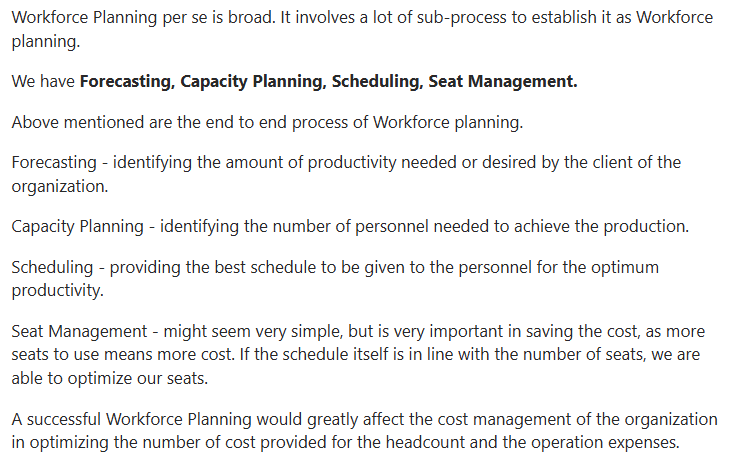
Strategic workforce planning is what your company requires of employees. You need to analyze your current staff levels and see if they need help or are the best fit for your company.
With on-point workforce planning, you can allot the right task to the right person. It helps cater to over- or underutilization of resources and plan training for underperforming employees. These align your company’s goal in alignment with your recruitment strategy.
As per Quora:
5 Reasons Why Workforce Planning Is Important
There are several benefits of workforce planning. Here are some reasons why workforce planning is important:

Aligns Workforce with Business Strategy
Strategic workforce planning is pivotal to aligning your processes with your business strategy. You must identify your workforce needs and skill gaps, and streamline your talent strategy to become a best-in-breed company. A recent study has predicted that by 2025, up to 70% of U.S. office workers will work at least five days a month.
Therefore, it’s not important just to “recruit and retain.” Your strategy should be designed to navigate workforce challenges. The planning should be built on defined goals, good communication and dedicated software solutions.
Ensures Business Continuity
When organizations face disruptions in their process, they must be pre-equipped to combat technology changes, economic shifts or unprecedented catastrophes. You must align human resources with organizational goals, ensuring your company can meet current and future goals efficiently.
Improves Employee Productivity
When your staff and tasks are balanced, your organization can do wonders. The workload is even, and each employee knows what they are accountable for. It distributes work without over- or underutilizing and prevents the risk of burnout. This makes your employees have a work-life balance, and you can have happy customers as well.
Related read: How to Calculate Workforce Productivity: A Step-by-Step Guide
Reduces Hiring and Labor Costs
When you onboard new employees, there is a huge cost attached. But strategic workforce planning reduces this cost. With workforce analytics tools like we360.ai, you can predict future staffing needs and resources required for it. This balances the workforce and reinforces a positive work environment.
Identifies Inefficiencies and Skill Gaps
Current AI use is disrupting the market. The jobs posted in the UK are growing 3.6x faster than all regular job posts as per PWC’s 2024 AI Jobs Barometer. Therefore, you can upskill your employees to adopt AI into their regime and upskill instead of hiring externally.
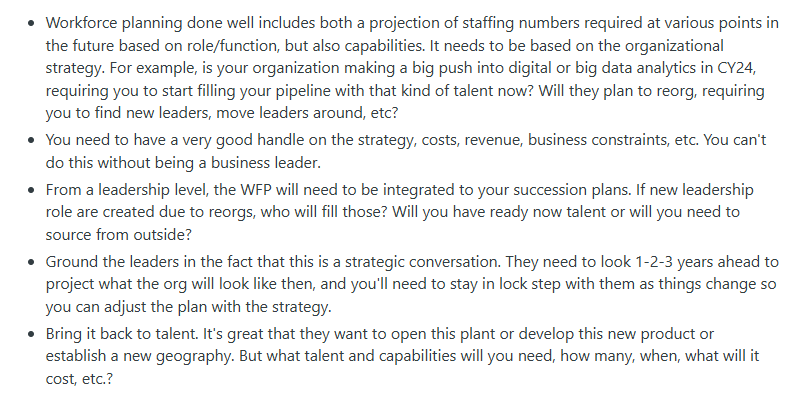
Here’s what a Redditor has to say about workforce planning strategy:
Workforce Planning Process: Step-by-Step Breakdown
Workforce planning is a step-by-step process. It is entitled to:
Define Business Goals
You must ensure that workforce analytics tools are transparent and fair. The use of these tools should familiarize one with chalking out business goals as per the organization's alignment. Some businesses might feel comfortable using workforce planning tools, while others may use them to audit future staffing needs and skills.
Analyze Current Workforce
Assessing your current workforce gives you insight into how they are utilized. This helps you understand whether you have the right people, skills, and capacity to meet current and future goals. You can start by collecting data on employees' roles, skills, performance levels, experience, and productivity.
You should also delve beyond numbers to understand how efficiently teams are working and if the workload is distributed evenly.
Forecast Future Workforce Needs
Using workforce planning tools, you can broadcast future staffing requirements.
This works with data analysis, technology tools, and communication and collaboration. You can use historical data, market trends, and predictive analytics to assess prior hiring patterns and identify skill gaps and turnover trends. You can also use workforce planning tools to simulate an environment and predict future trends or needs.
Build Workforce Planning Strategies
Use the data assimilated from workforce planning tools to make concrete choices. Align your people, skills, and structure with long-term goals. Understand your business goals, revenue targets, timeline, and future projects when defining workforce strategies.
Implement and Monitor
A meticulous workforce planning strategy is effective when it’s executed correctly. Ensure that your hiring plans and responsibilities are outlined clearly. You should carry out regular audits to ensure the plan is rolled out accurately, and if tweaking is required,
Workforce Planning Strategies
Align Workforce Planning with Business Goals
With time, organizations complicate their overview of job roles. You should assess what skills your employees have that drive the organization towards revenue. How does your employees’ current performance tally up to required skills for jobs? What skills drive the organization further, and what impact has learning these skills delivered for your organization? Quantify the impact of these skills on bringing you closer to your strategic goals.
Use Data-Driven Workforce Analysis
With the rise of data-driven insights, workforce planning has changed a lot. You may now use advanced tools to make better, more strategic choices about how to improve your personnel. In fact, companies that use data-driven insights are 58% more likely to reach their revenue goals than those that rely only on their gut feelings.
Focus on Skill Gap Identification and Upskilling
Companies need to assess their skill gaps to have a competitive edge in the market. Skill gaps occur when employees do not keep up with their current or future roles. This can negatively impact productivity, innovation, and growth.
If you do not address these gaps, they may snowball into missed business opportunities, lousy CX, and humongous hiring costs. Addressing skill gaps leads to upskilling or reskilling to build an agile, future-ready workforce.
Implement Flexible Workforce Models
Being able to change is the most important part of a flexible job plan. It enables you to alter the number of people you hire based on what your business needs. Unlike traditional models, which have a defined number of workers, flexible workforce models can arrange their workers in different ways. This helps the firm work more efficiently overall by adjusting staffing levels when things are busy or slow, leveraging specific skills, and meeting specific demands. It also saves money on long-term labor costs.
Continuously Monitor and Optimize Workforce Performance
Keep an eye on workforce planning results at all times to see how well you're progressing toward your goals and milestones. Use these ideas to improve and change your plans as needed. Also, keep an eye on employee turnover, especially in important roles, to see how it affects the quality of service overall.
How we360.ai Helps You Execute Workforce Planning Effectively
Now that you know about workforce playing and how it’s strategized, let’s delve into we360.ai, your go-to tool for workforce planning. It’s leveraged for:
Real-Time Workforce Insights
We360.ai provides real-time visibility into talent performance and capacity, driving smarter workforce planning and operational decisions. The tool is equipped with data-backed insights to optimize resources and scale with confidence.
Identify Skill and Performance Gaps
Get a clear understanding of how your teams truly operate, from time invested in high-impact skills to patterns of focus and engagement. Move past surface-level activity and uncover the real drivers of performance across tools, teams, and time.
Optimize Workforce Allocation
We360.ai leverages AI-driven insights in real time to help your employees work better and make the most of their time. The program tells you where bottlenecks are so you can swiftly rebalance your tasks, avoid burnout, and save money on unnecessary recruiting expenses.
Data-Driven Workforce Planning
It empowers data-driven workforce planning by leveraging AI-driven analytics to monitor productivity, application usage, and employee well-being in real time. This enables you to streamline workflows, detect burnout risks early, and make informed decisions.
Continuous Monitoring and Improvement
Teams can quickly identify areas for improvement and inefficiencies by analysing trends in productivity, focus, and tool use. This constant visibility creates a feedback loop that enables firms to continually improve their operations, performance, and growth.
We360.ai: The Tool You Need for Workforce Planning
Planning your workforce does more than just help you find the best people to hire. It also helps your business run more smoothly, lower costs, and get your employees more invested. Businesses can stay flexible, competitive, and ready for the future by ensuring their people, skills, and business goals are in sync.
And guess what..it's ideal for multi-location teams looking to track operational efficiency at a glance and align business decisions with our workforce regional performance tool.
Effective HR workforce planning empowers leaders to move from reactive hiring to a proactive strategy. With the support of data-driven tools like we360.ai, businesses can gain real-time insights, identify gaps early, and continuously optimize workforce performance. The result is a smarter, more resilient organization that is equipped to adapt, grow, and succeed in 2026 and beyond.
If you’re looking to optimize your hiring and employee retention, book a FREE DEMO with we360.ai today!