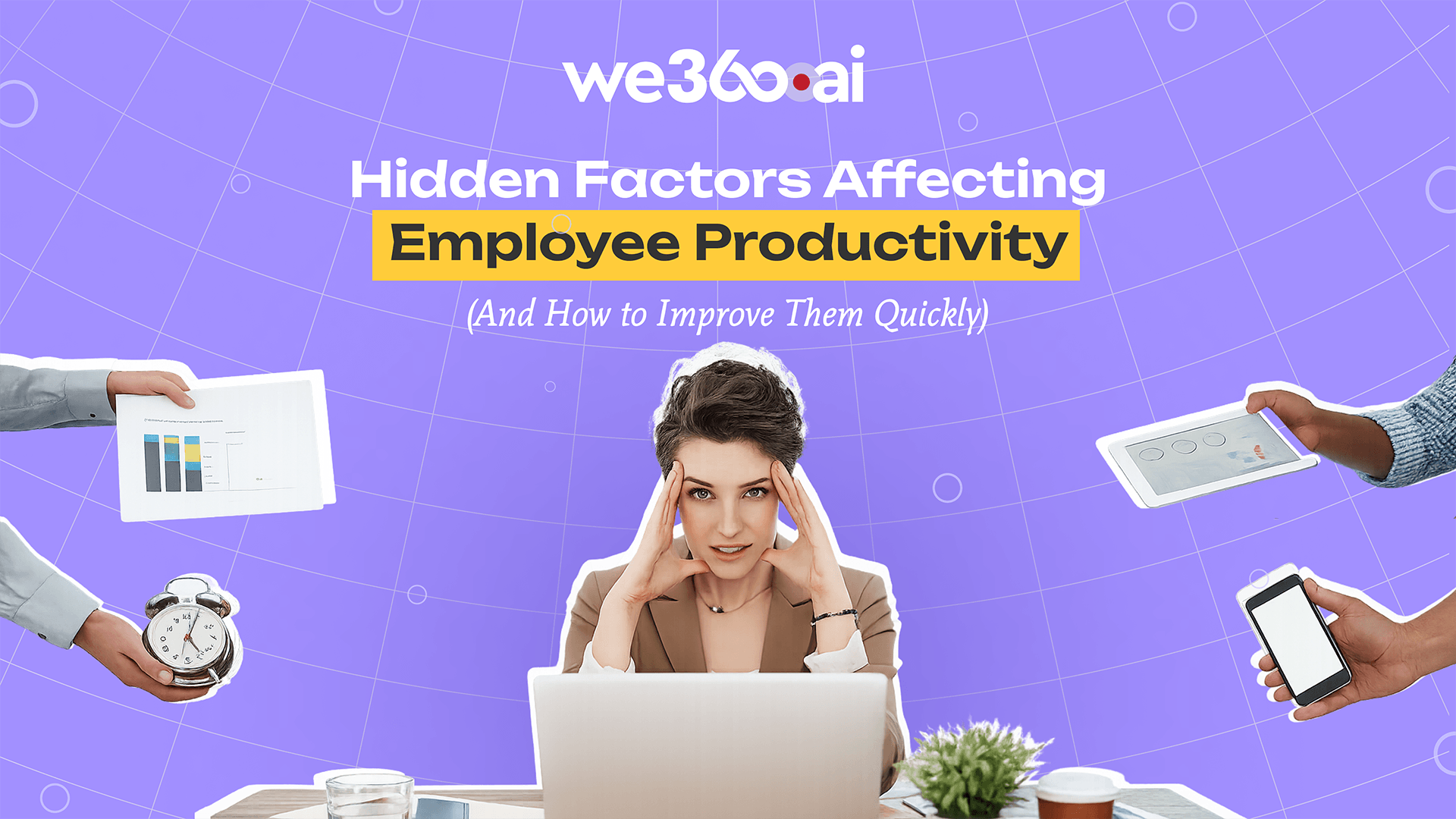

Employee productivity is often seen as a direct result of effort, but in reality, it’s shaped by a range of underlying factors that aren’t always visible. A team may appear busy, yet still struggle to deliver consistent results. Deadlines slip, quality drops, and engagement slowly declines. The issue usually isn’t a lack of effort; it’s a lack of clarity around what’s actually affecting performance.
Many of these productivity barriers go unnoticed. Outdated tools, unclear expectations, poor communication, or even subtle workplace stress can quietly reduce output over time. Because these factors aren’t always obvious, they’re often ignored until they start impacting business results.
Understanding what truly drives or blocks productivity is the first step toward improving it. When businesses identify these hidden factors early, they can make quick, practical changes that lead to better performance, stronger teams, and more consistent outcomes.
Why Employee Productivity Matters
Employee productivity matters for the company to run consistently! Apart from this, we have gathered a few important pointers that tell exactly why employee productivity matters.
Higher Output in Less Time
When employees are productive, they can complete more work within the same time frame without feeling overworked. This doesn’t mean rushing tasks; it means working with focus, clarity, and the right support.
Efficient processes, fewer distractions, and better tools allow employees to use their time effectively. Over time, this leads to faster project completion, improved team capacity, and the ability to take on more meaningful work without increasing headcount.
Better Quality of Work
Productivity isn’t just about speed; it’s closely tied to quality. When employees have clear goals, proper resources, and fewer interruptions, they produce more accurate and thoughtful work.
This reduces the need for rework, minimizes errors, and improves overall output standards. High productivity creates an environment where employees can focus on doing things right the first time instead of constantly fixing mistakes.
Improved Customer Experience
Productive teams directly impact how customers experience your business. Faster response times, smoother processes, and consistent service all contribute to higher customer satisfaction. When internal operations run efficiently, customers receive timely updates, quicker resolutions, and better overall interactions. In many cases, strong behind-the-scenes productivity creates a seamless experience for the end user.
Increased Employee Satisfaction
Employees feel more satisfied when they can work without unnecessary obstacles. Clear expectations, manageable workloads, and the ability to complete tasks efficiently reduce frustration and stress.
When people feel productive, they also feel more accomplished and engaged in their roles. This creates a positive work environment where employees are motivated to contribute and perform consistently.
Lower Attrition
A productive workplace often leads to higher retention. When employees are supported with the right tools, guidance, and structure, they are less likely to feel overwhelmed or disengaged. Poor productivity environments, on the other hand, often lead to burnout and dissatisfaction.
By improving productivity, businesses can create a more stable and supportive workplace, reducing turnover and the costs associated with hiring and training new employees.
10 Key Factors Affecting Productivity in Employees (With Solutions)
Productivity is rarely affected by a single issue. It’s usually a combination of everyday challenges that slowly reduce focus, efficiency, and output. Addressing these areas thoughtfully can lead to noticeable improvements.

1. Tools and Technology
When employees work with slow, outdated, or too many overlapping tools, their efficiency drops. Constant switching between apps or dealing with systems that don’t integrate well breaks focus and wastes time.
A regular review of your tech stack helps identify what’s actually useful. Simplifying tools and ensuring they support the workflow can immediately improve how work gets done.
For instance, teams juggling multiple platforms for the same task often perform better when everything is streamlined into one system.
2. Communication
Unclear or scattered communication is one of the most common productivity blockers. When employees repeatedly have to search for information or clarify instructions, work slows down.
Creating clear communication structures, such as defined channels and documented processes, helps reduce confusion.
For example, having a single, shared project brief instead of scattered updates across chats and emails keeps everyone aligned.
3. Goals and Expectations
Without clear direction, employees may stay busy but not productive. Vague expectations lead to inconsistent results and wasted effort.
Setting specific, measurable goals helps employees understand what they should focus on and how success is defined.
A clear target, like improving response time within a set period, is far more effective than general instructions.
4. Leadership
The way teams are guided directly impacts their productivity. Delayed decisions, lack of feedback, or unclear direction can slow progress and create uncertainty. Strong leadership ensures that employees have clarity, support, and timely input.
Teams tend to perform better when managers actively remove obstacles and keep work moving forward instead of becoming bottlenecks.
5. Employee Engagement
When employees feel disconnected from their work, productivity naturally declines. They may complete tasks, but without focus or initiative. Keeping employees involved, recognizing their contributions, and helping them understand the impact of their work can significantly improve engagement.
People tend to perform better when they feel their work matters.
6. Health and Well-being
Burnout and stress are often overlooked but have a major impact on performance—employees who are mentally or physically exhausted struggle to maintain focus and consistency. Encouraging balanced workloads, reasonable deadlines, and regular breaks helps sustain long-term productivity.
Teams that avoid constant overwork tend to deliver more stable and reliable results.
7. Training and Development
A lack of proper training can slow employees down, even if they are capable. Without the right knowledge or skills, tasks take longer, and errors become more common.
Ongoing learning opportunities and proper onboarding ensure that employees can work confidently and efficiently. When new tools or processes are introduced with the right guidance, adoption becomes much smoother.
8. Incentives and Recognition
When effort goes unnoticed, motivation drops over time. Employees are less likely to put in extra effort if their work is not acknowledged. Regular recognition, even in simple forms, can make a big difference.
Teams where achievements are appreciated often show higher energy, better collaboration, and stronger performance.
9. Time Management
Poor time management often shows up as missed deadlines, rushed tasks, or constant multitasking. Frequent interruptions and unnecessary meetings make it difficult to focus on meaningful work. Encouraging structured work schedules, prioritization, and dedicated focus time helps employees manage their workload more effectively.
Even small changes, like reducing meeting overload, can free up significant time.
Related read: 10 Proven Techniques for Mastering Time Management at Work
10. Work Environment
The environment in which employees work plays a key role in how well they perform. Noise, clutter, or an improper workspace setup can affect concentration. This applies to both physical offices and remote setups.
A well-organized, distraction-free environment supports better focus and consistency. Even simple improvements in workspace design or digital organization can lead to noticeable productivity gains.
Choose We360.ai to Improve Your Employee Productivity
Improving productivity becomes much easier when you have clear visibility into how work actually happens. We360.ai is designed to give you that clarity without adding complexity to your processes.
Track Productivity in Real-Time
We360.ai lets you see how teams work in real time. Instead of relying on assumptions or delayed reports, you get a live view of activity, helping you understand where time is being spent and how work flows across the day.
Identify Productivity Gaps
Not all inefficiencies are obvious. Some teams may appear busy but still fall behind due to hidden bottlenecks. With detailed insights, We360.ai helps uncover gaps such as underutilized time, excessive idle periods, or tools that slow teams down.
Optimize Work Patterns
Once you understand how work is actually being done, it becomes easier to improve it. We360.ai highlights patterns in employee behavior, allowing you to adjust workflows, reduce distractions, and create more focused work environments that support consistent performance.
Enable Data-Driven Decisions
Instead of making decisions based on guesswork, you can rely on real data. Whether it’s reallocating resources, adjusting workloads, or improving processes, We360.ai provides the insights needed to make practical, informed changes that drive better results.
Best Practices to Manage Employee Productivity
Managing productivity isn’t about pushing people harder. It’s about creating the right structure so teams can perform consistently without unnecessary friction.
- Monitor productivity regularly: Review it consistently, not just when something goes wrong. Regular monitoring helps identify trends early, whether it’s a drop in performance or a pattern of inefficiency. This makes it easier to take timely action rather than react too late.
- Use data instead of assumptions: Relying on gut feeling often leads to incorrect decisions. What looks like low performance may actually be a process issue or tool limitation. Using real data helps you understand the root cause and take actions that actually solve the problem rather than just treating symptoms.
- Set clear priorities: When everything feels urgent, employees struggle to focus on what truly matters. Clear priorities help teams allocate their time effectively and avoid wasting effort on low-impact tasks. This also reduces stress and improves overall output quality.
- Avoid overloading top performers: High-performing employees often end up taking on more work than others. While this may seem efficient in the short term, it can lead to burnout and reduced performance over time. Distributing work more evenly ensures long-term consistency and team stability.
- Continuously optimize workflows: Work processes should evolve with time. Regularly reviewing how tasks are completed can reveal unnecessary steps, delays, or inefficiencies. Even small improvements in workflows can save significant time and improve productivity across the team.
Conclusion
Employee productivity is influenced by more than just effort or skill. It’s shaped by everyday factors like tools, communication, leadership, and work environment. When these areas are aligned, productivity improves naturally without the need for constant pressure.
The key is to identify what’s holding your team back and address it with practical changes. Small improvements in the right areas can lead to better performance, stronger engagement, and more consistent results over time.
If you want a clearer view of how your teams are actually working, We360.ai helps you turn everyday activity into actionable insights. With the right data, you can remove bottlenecks, optimize workflows, and create an environment where productivity grows sustainably.